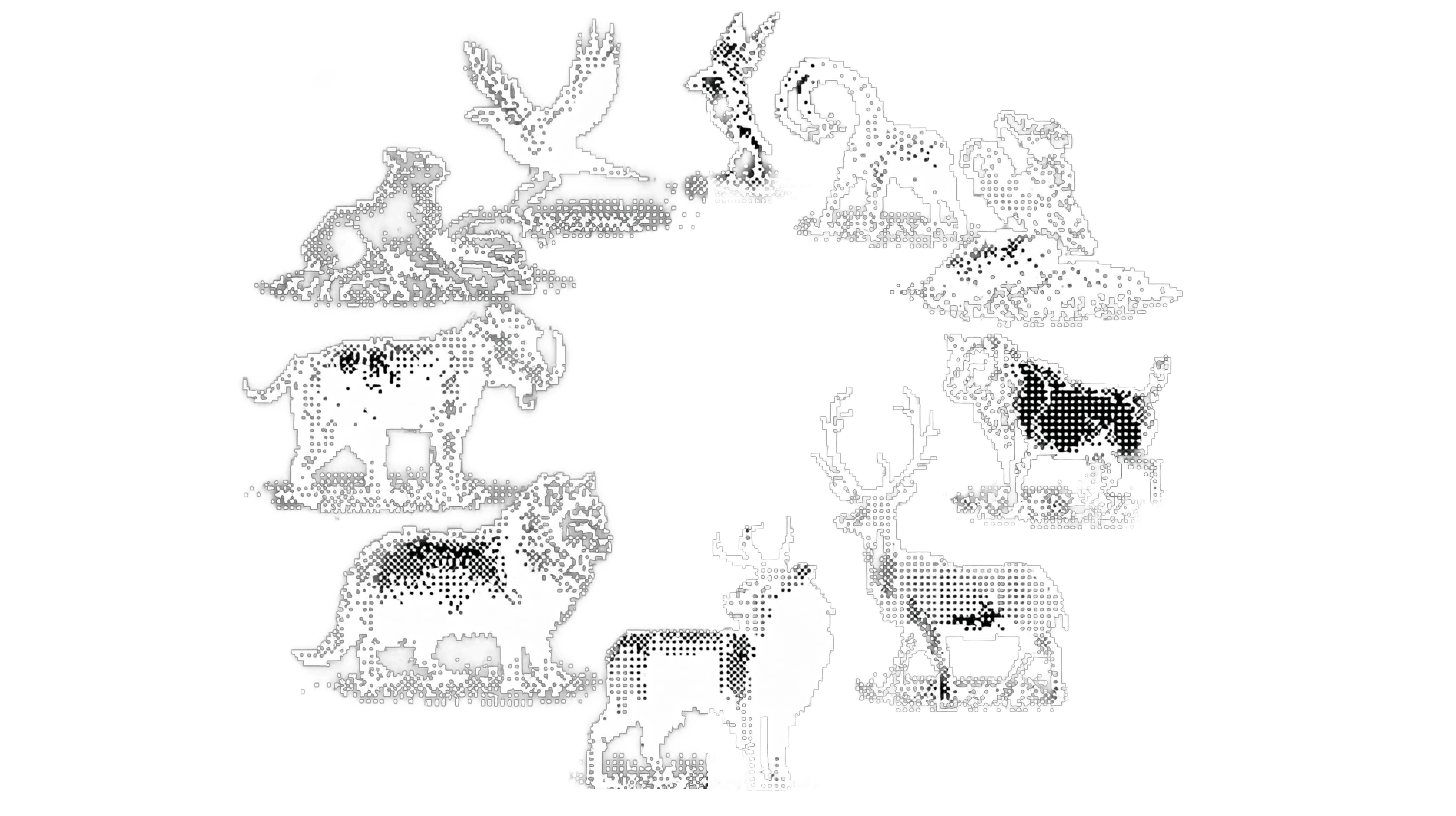
The standard brand archetype model is 25 years old. It maps 12 types (The Hero, The Sage, The Explorer, and so on) to human motivations borrowed from Jung. It tells you how your brand should feel to people. Professional, nurturing, rebellious, innocent.
It was built for storytelling. It works for storytelling. If your goal is to write a brand narrative that resonates emotionally, the Jung model gives you a starting point.
But storytelling is not strategy. Knowing your brand is "The Creator" does not tell you how to enter a new market, why your customers leave, or where your positioning is vulnerable. It does not explain why your marketing says one thing and your product experience says another.
The Tonika archetype system maps brand to strategic behavior. It answers different questions: How does your brand acquire attention? How does it retain relationships? What happens when those two energies conflict?
The structural difference.
The Jung/Mark and Pearson model (2001) asks: what human motivation does this brand serve? The answer is a single type: belonging, mastery, independence, stability.
The Tonika model asks two questions:
- What strategic energy does this brand use to acquire? (Primary archetype)
- What strategic energy keeps people once they arrive? (Secondary archetype)
A brand is not one thing. It is a composition of two energies that sometimes align and sometimes pull in opposite directions. The interesting part is the tension between them.
This produces 132 ordered combinations (12 primaries multiplied by 11 possible secondaries). Each combination has a distinct strategic signature, a named tension, and specific failure modes.
The 12 archetypes.
Each archetype represents a strategic dimension. Not a personality trait. Not a narrative register. A way of operating in the market.
Lion — Authority.
Lion brands command through presence. They do not argue for their position; they occupy it. The market looks to Lion brands for the standard, the benchmark, the thing everyone else is measured against.
Strategic signature: Market gravity. Others orient around your position. Your way becomes the way.
Audience expectation: "Tell me what good looks like. I trust your judgment more than my own research."
Failure mode: Authority without evolution calcifies into arrogance. The brand stops listening and becomes the incumbent everyone wants to dethrone.
Phoenix — Reinvention.
Phoenix brands lead through transformation. They are category disruptors, the ones who arrive saying "everything you know about this is wrong." Their power is the willingness to destroy the current version of themselves to become the next.
Strategic signature: Disruption as identity. The brand is the change itself, not merely an agent of it.
Audience expectation: "Show me what comes next. I follow you because you see the turn before anyone else."
Failure mode: Constant reinvention without a thread. The audience cannot build a relationship with something that is always becoming something else.
Wolf — Community.
Wolf brands lead through belonging. They build movements, not audiences. Members recruit members, defend the brand, and derive identity from association. The product is the pack.
Strategic signature: Movement energy. Customers become evangelists without being asked. Association becomes identity.
Audience expectation: "Make me feel like I belong. Give me a tribe that shares my values and my taste."
Failure mode: The pack turns inward, gatekeeps, develops hostility toward outsiders. Community without openness is a cult.
Unicorn — Craft.
Unicorn brands lead through irreducible quality. The product justifies the premium through excellence rather than marketing. They attract people who notice.
Strategic signature: Detail obsession visible in places most users will never look. Choosing the brand says something about the chooser.
Audience expectation: "Respect my intelligence. I will pay more because I can tell the difference."
Failure mode: Perfectionism prevents shipping. The brand becomes so focused on craft that it forgets the user.
Kraken — Scale.
Kraken brands lead through infrastructure and reach. They are platform plays, ecosystem builders. Once you build on them, the switching cost makes leaving unthinkable.
Strategic signature: Platform gravity. Others build on top of you. Network effects compound with every user.
Audience expectation: "Be everywhere I need you. Make the infrastructure invisible so I can focus on my work."
Failure mode: The platform leverages its position to extract rather than create value. Users feel trapped, not served.
Mermaid — Depth.
Mermaid brands lead through emotional resonance and narrative. Their content is the product, their story is the strategy. They operate in registers most brands cannot reach.
Strategic signature: Owns a feeling, not just a feature set. Story does the selling; the product confirms it.
Audience expectation: "Make me feel understood. Give me language for something I could not name."
Failure mode: All feeling, no function. The brand drowns in its own depth. Depth without utility is poetry no one can use.
Owl — Wisdom.
Owl brands lead through knowledge no one else has synthesized. They are the source others cite. Authority comes from depth of research and originality of framework.
Strategic signature: Source authority. Others cite you. You cite primary research. Framework creation that others adopt as their own.
Audience expectation: "Teach me something I cannot learn elsewhere. I trust your synthesis more than my own research."
Failure mode: The ivory tower. Accumulates knowledge but never acts on it. Wisdom without application is irrelevance wearing a crown.
Serpent — Strategy.
Serpent brands lead through subtlety and timing. They win by being most precisely positioned. They understand leverage points, competitive blind spots, and the power of patience.
Strategic signature: Positional intelligence. Always in the right place before others realize it matters.
Audience expectation: "Outthink the market for me. I trust your strategic instinct more than any playbook."
Failure mode: Strategy without transparency reads as manipulation. The audience cannot trust what it cannot see.
Stag — Heritage.
Stag brands lead through tradition and stewardship. They are the institutions, the legacy houses. Their longevity is itself a proof point.
Strategic signature: Duration as credential. Deliberate pace as a choice, not a limitation. Stewardship of tradition.
Audience expectation: "Be the thing I can rely on. Do not chase trends. Be the constant."
Failure mode: Heritage without relevance is a museum. The brand preserves form at the expense of function.
Falcon — Speed.
Falcon brands lead through velocity and precision. They ship first, iterate fastest, and treat speed as the primary competitive moat.
Strategic signature: First-mover instinct combined with precision at speed. Competitors cannot match the cadence.
Audience expectation: "Move faster than I can. If I have to wait for you, I will find someone who does not make me wait."
Failure mode: Speed without recovery is unsustainable. The brand ships constantly but builds no depth. Velocity without direction is just motion.
Bear — Protection.
Bear brands lead through strength in service of safety. They are the brands people turn to when the stakes are high and failure is not an option.
Strategic signature: Quiet strength that does not need to announce itself. Safety architecture where failure is structurally difficult.
Audience expectation: "Protect what matters to me. I chose you because I cannot afford this to go wrong."
Failure mode: So focused on safety that it prevents growth. Protection without permission to risk is a cage.
Raven — Mystery.
Raven brands lead through the unexpected. They are cult brands with waiting lists not from scarcity tactics but because the experience cannot be explained, only encountered.
Strategic signature: Discovery as product. Atmosphere over explanation. Knowing about the brand confers status.
Audience expectation: "Surprise me. Reward my attention. Make me feel like I found something no one else has."
Failure mode: So mysterious that no one can find the door. Mystery without a path in is just obscurity.
Why this model uses two archetypes, not one.
Single-type models work for narrative exercises. You identify with The Rebel or The Sage and it guides your tone of voice.
But brands do not operate in one mode. They acquire differently than they retain. The energy that attracts new customers (Phoenix's disruption, Falcon's speed, Lion's authority) is often different from the energy that keeps them (Wolf's community, Bear's protection, Kraken's infrastructure lock-in).
When those two energies are unacknowledged, the brand feels inconsistent. The marketing promises reinvention but the product experience delivers heritage. The sales motion says community but the retention mechanic is switching cost. The customer feels a gap between what brought them in and what keeps them around.
The compositional model makes that gap visible. It names both energies, maps the tension between them, and turns the tension into strategic advantage rather than brand confusion.
How to find yours.
The Tonika Brand Personality Quiz is a 10-question diagnostic that identifies your primary and secondary archetype. The first five questions measure acquisition energy. The last five measure retention energy. Two minutes, 132 possible results.
Your result becomes the first piece of structured data in your brand context. Every recommendation, voice suggestion, and positioning check your AI tools produce starts from knowing which two energies your brand operates with and where the tension lives.